Rythmeet
Context
Rythmeet a startup focused on connecting musicians with collaborators, venues, and studios. The client was looking for a website redesign to improve the user experience and interface.
Brainstorming
What do we prioritize?
When first focusing on the redesign of the whole website, the team recognized that there were too many things that needed to be done in a short amount of time, so we decided to prioritize the main features and have other features be side projects at the end if we still had time. The main features that we decided to focus on changing the process in helping the user create a profile (this was assigned to 4 designers) and the other feature we focused on was creating an event which allows the event organizer to create and events (assigned to 3 designers). We thought these two would best achieve the goal of improving the user experience as well as increase visibility in events.
Design process
From scoping to screens
With profile creation and event creation prioritized, the team moved into iterative wireframes and high-fidelity flows. Full process frames (sketches, flows, and hifi) will match Figma once design context for node 616:20192 is available.
my contribution
Creating Events
-
 Visibility
-
Relevence
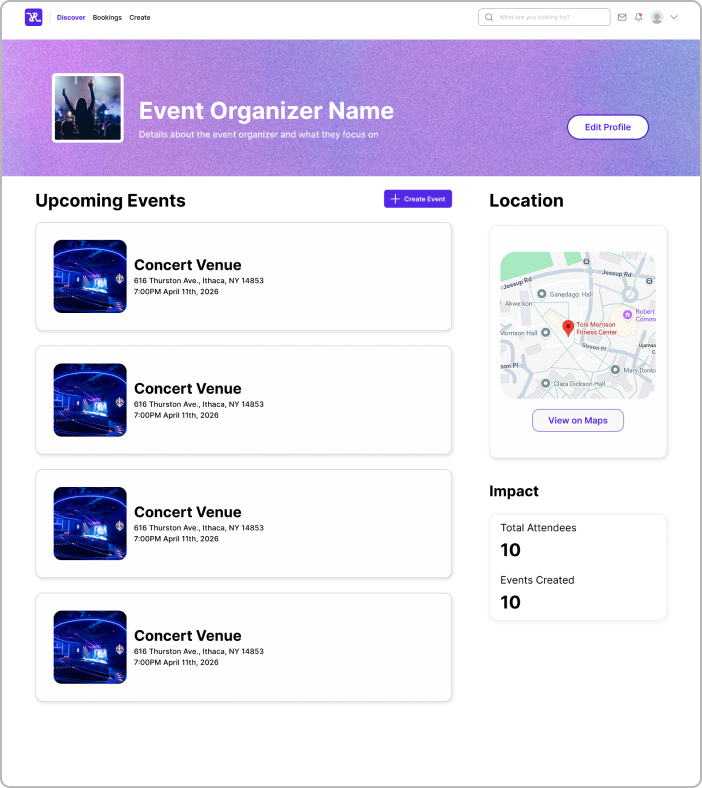
The entry point fto create an event was originally from the hero and moved to a place that was more consistent with the content it provided.
-
Reduced long flows
-
Guided onboarding
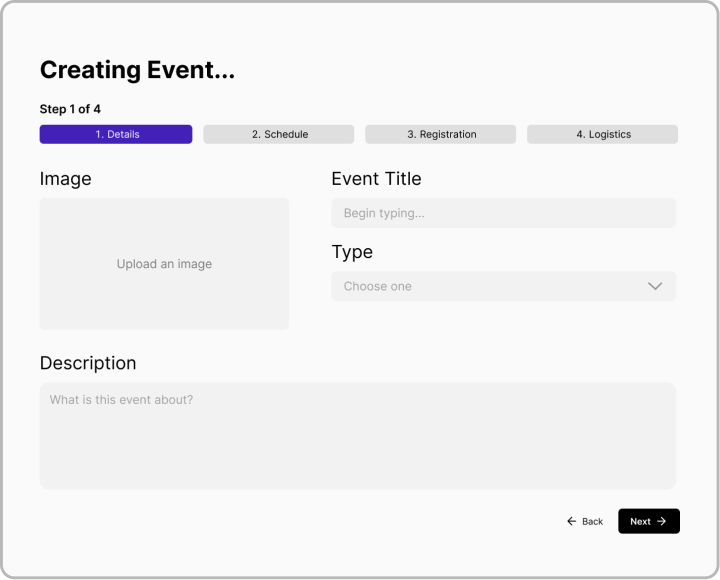
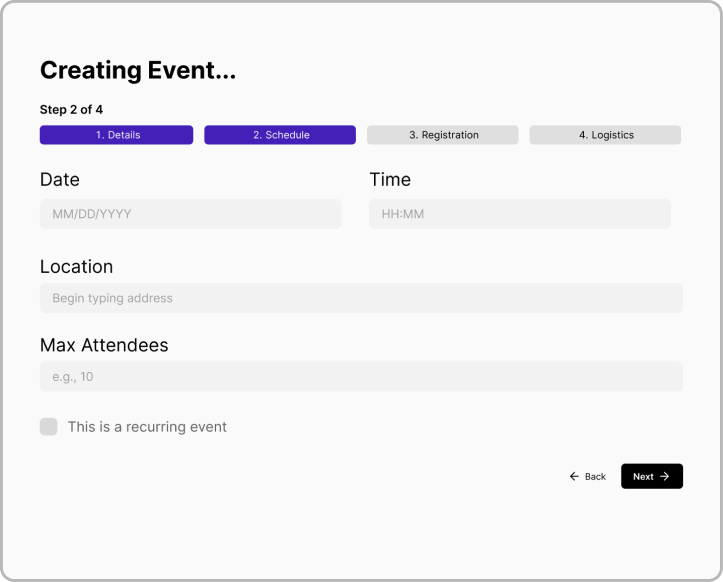
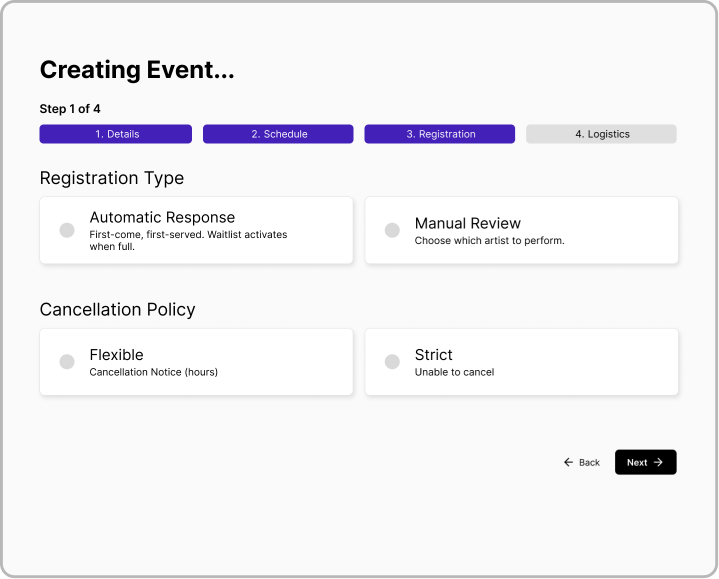
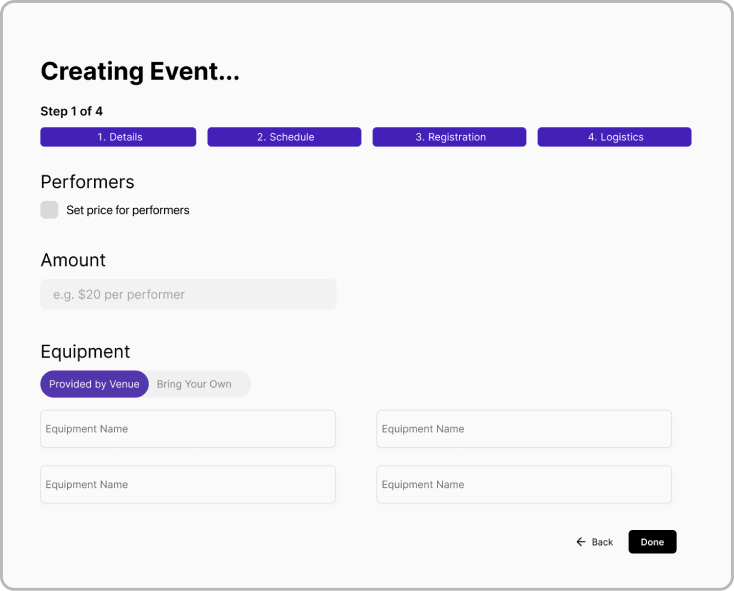
To avoid the users traveling to another page, the process of creating an event was changed to a pop-up flow.
The steps were also broken down into multiple steps to give users a clear sense of progress in response to their input.
reflection
What I learned.
-
1
Designing collaboratively versus independently. Receiving other designers' feedback and understanding different perspective and approaches alongside my work taught me how to continue prioritizing design decisions while still being receptive to input.
-
2
Project scoping: Prioritizing the flows with the biggest impact rather than trying to address every issue identified.
Quality over quantity.
-
3
Organization: With so many designers working in one space, keeping files and designs organized was necessary.