Context
Menuvo was built as part of a one-week hack challenge with the goal of launching a 0-to-1 product. I was responsible for end-to-end product design from an idea to engineer handoff.
Our objective
What inspired us?
As students (and food lovers), we wanted to focus on an aspect on our life that was overlooked once we moved to college: cooking. It was an opportunity for our craft to encourage cooking. Through this product, we explored how sharing, reviewing, and creating recipes with friends can encourage cooking.
Research
How do we encourage recipe tracking and cooking?
We conducted user interviews on 4 people who regularly cook.
- "I save recipes constantly, but rarely revisit to cook them since they're spread across various platforms."
- "I am more likely to follow a recipe when a friend shares something they've followed."
- "Sometimes when following recipes, I make changes to how it is made but there's no way to note these details."
Market Research
Essential features within these apps are hidden behind paywalls, making them inaccessible. This insight inspired us to create Menuvo as an open and accessible alternative.
-
 Pepper - Recipe Organizer
-
 Rye: Recipes & Meal Planner
-
 Pestle: Recipe
After conducting market research on products that currently address recipe tracking and other apps that combine social interaction with activity, we drew key insights for what Menuvo would look like.
-
 Beli
Beli- Able to browse restaurant reviews from friends
- Shared notes on specific dishes
-
 Recipe Keeper
- Not intuitive UI
- For recipe storage rather than personal expression
- All features are solitary
-
 Spotify: Blend Playlists
- Collaborative listening
- Discovering new songs through combined playlists with friends
Key Insights
- Flexibility is key People break rules, even in cooking
- Trust accumulates through people A friend's recommendation carries more weight
- Saving recipes isn't cooking Scattered recipes across various apps rarely make it to the kitchen
The solution
Menuvo: Where Recipes Meet Community
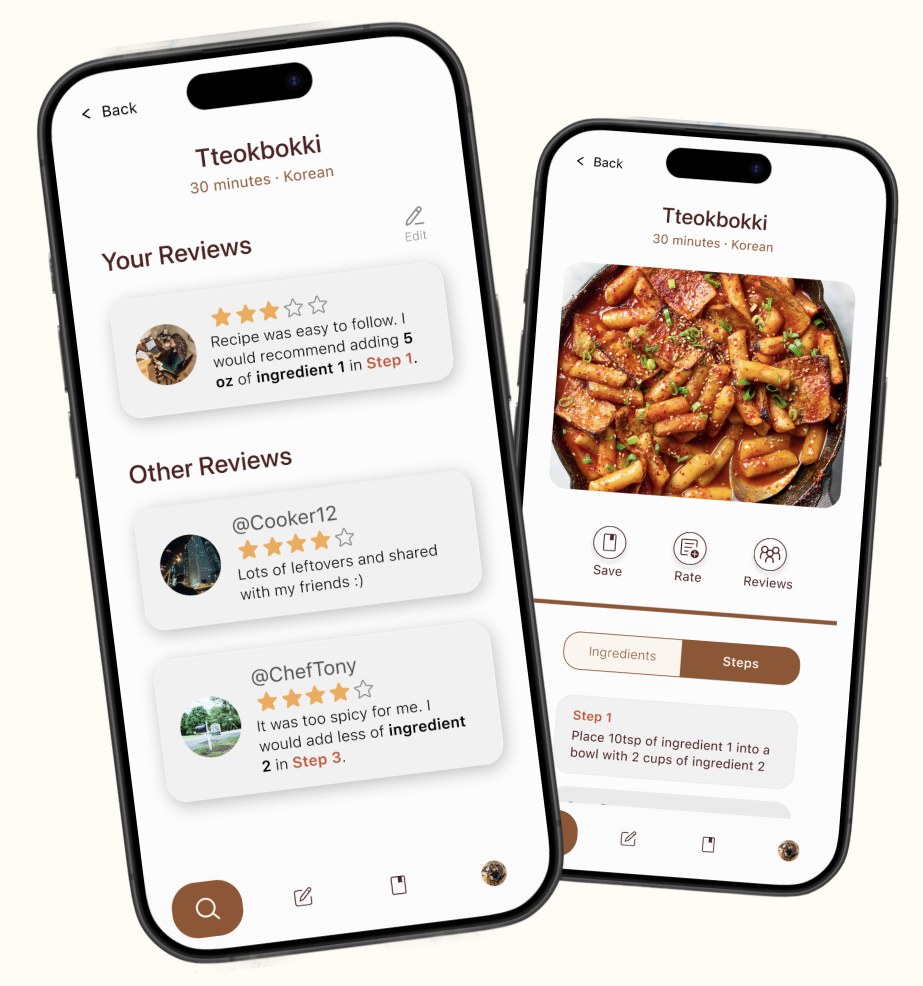

A social app for sharing, creating, and reviewing recipes with friends. Cooking just got more fun.

Design process
What are the main parts of our solution?
-
Discover
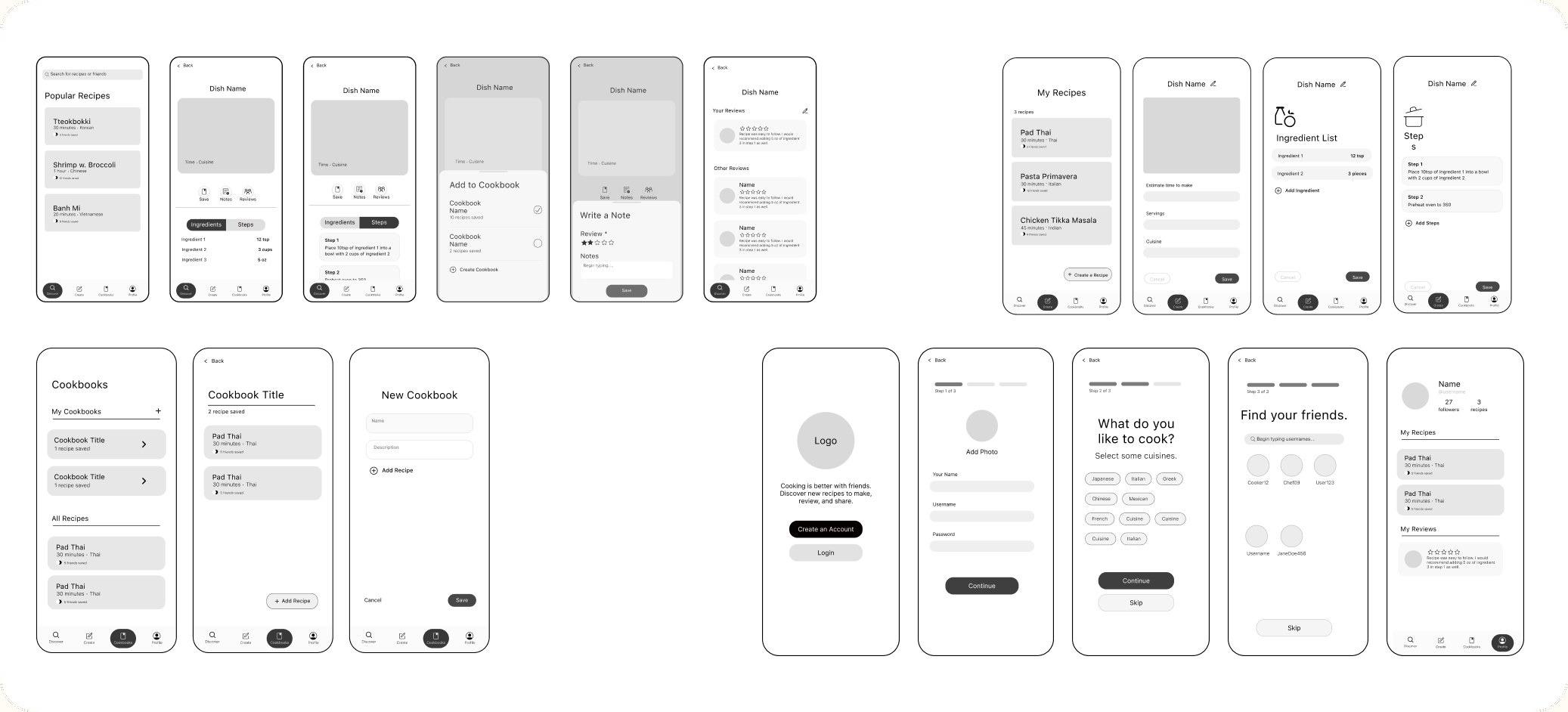
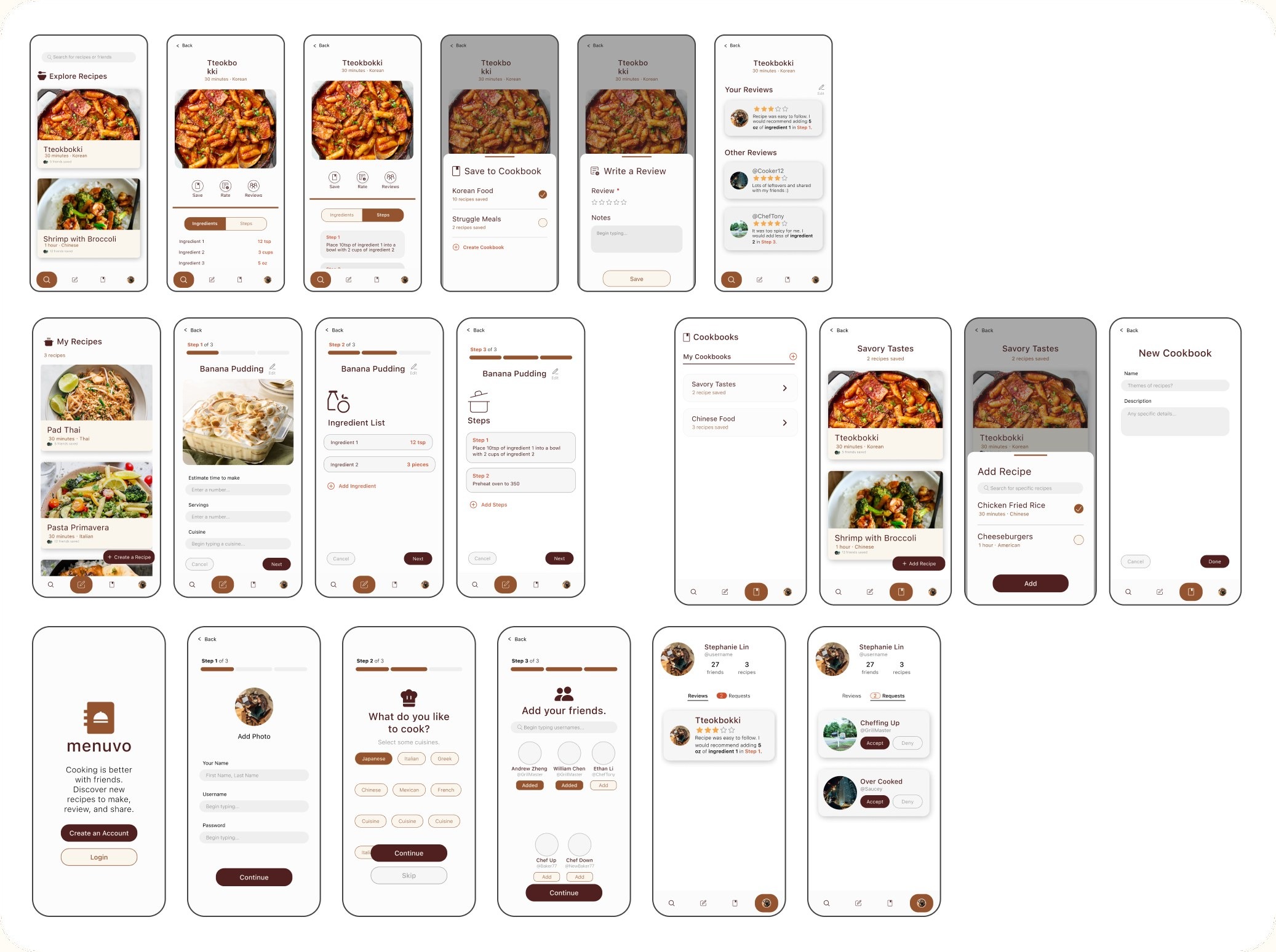
A feed allowing users to explore recipes from people they follow, adding a social dimension to recipe discovery. In each recipe card, reviews enables users to leave notes, ratings, and suggestions on recipes.
-
Create
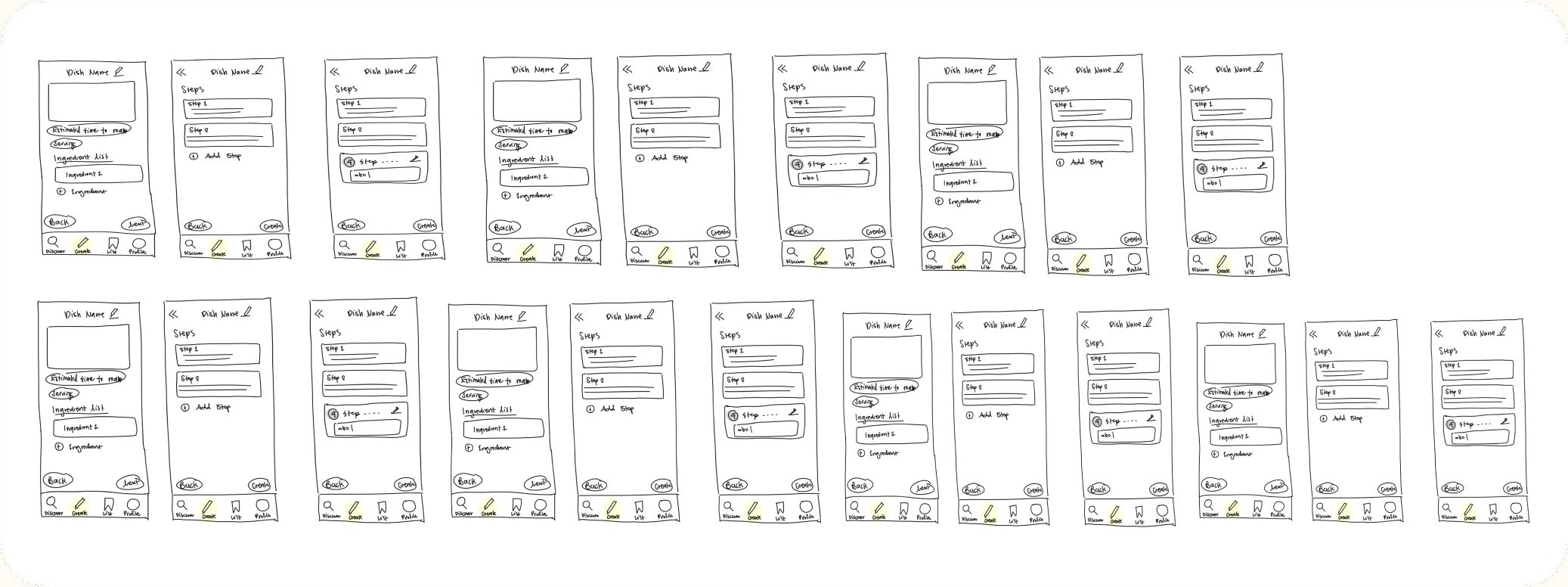
A recipe creation flow designed for users who want to document their own cooking. It breaks the process into two steps: ingredients and steps.
-
Cookbooks
A system for organizing and saving recipes into collections or categories, making it easy to curate and revisit.
-
Onboarding + Profile
A personal space where users can connect with friends. It keeps track of the user's cooking experience.
Final product
Menuvo
Reflection
If I had more time…
- User Testing Whether the design decisions address the pain points
- Branding Curating a visual identity that centers warmth and distinctiveness
- Gamifying the Experience Encouraging users to cook through competitive cooking challenges
What I learned
-
Feasibility and Usability Pivots
I learned that is important to align designs with technical feasibility and implementation, and that making changes to designs and continuing to iterate builds the best products.
-
Building with Constraints
As a designer, I recognized that ideas that can be brought to life are the strongest. Limitations exudes the best products as it challenged my problem solving skills.
-
Team Collaboration
It was my first time as a designer working in a larger team where everyone had different tasks, expanding my technical skills. Creativity welcomes adaptation and challenges in new settings.
-
Understanding the User
Understanding our designs and code exist to help the community. Beyond the scope of deadlines, intentional design decisions flourish when focusing on what people genuinely need.