Context
This project was completed for FigBuild 2026, an annual designation hosted by Figma. The goal of the designation was to address a human sense that is not the immediate five sense. We designed a tool that helped humans become tracks and manipulate of the sensory experience.
Our Challenge
Brainstorming...
The sense that we focused on was the implicit sense of danger when there is no threat physically around. Im short, it is the feeling of threat, not just by people but by the environment and surrounding. Our goals are to help the user feel more safe at night and guide them throughout the walk with more emotional calmness. To guide our design process, we asked:
How might we help nighttime walkers regulate their sense of threat?
User Research
Why do people feel unsafe walking?
We conducted rapid interviews to understand and identify the main pain points.
- “Certain environments can feel unsafe if I am unfamiliar with the area or there is a lack of lighting.”
- “When I am alone, I am more sensitive to sound such as people walking, doors opening, or conversation.”
- “Late at night, I am more wary of stationary people or things shifting when I can’t see.”
Key Features
-
Safe Route Navigation
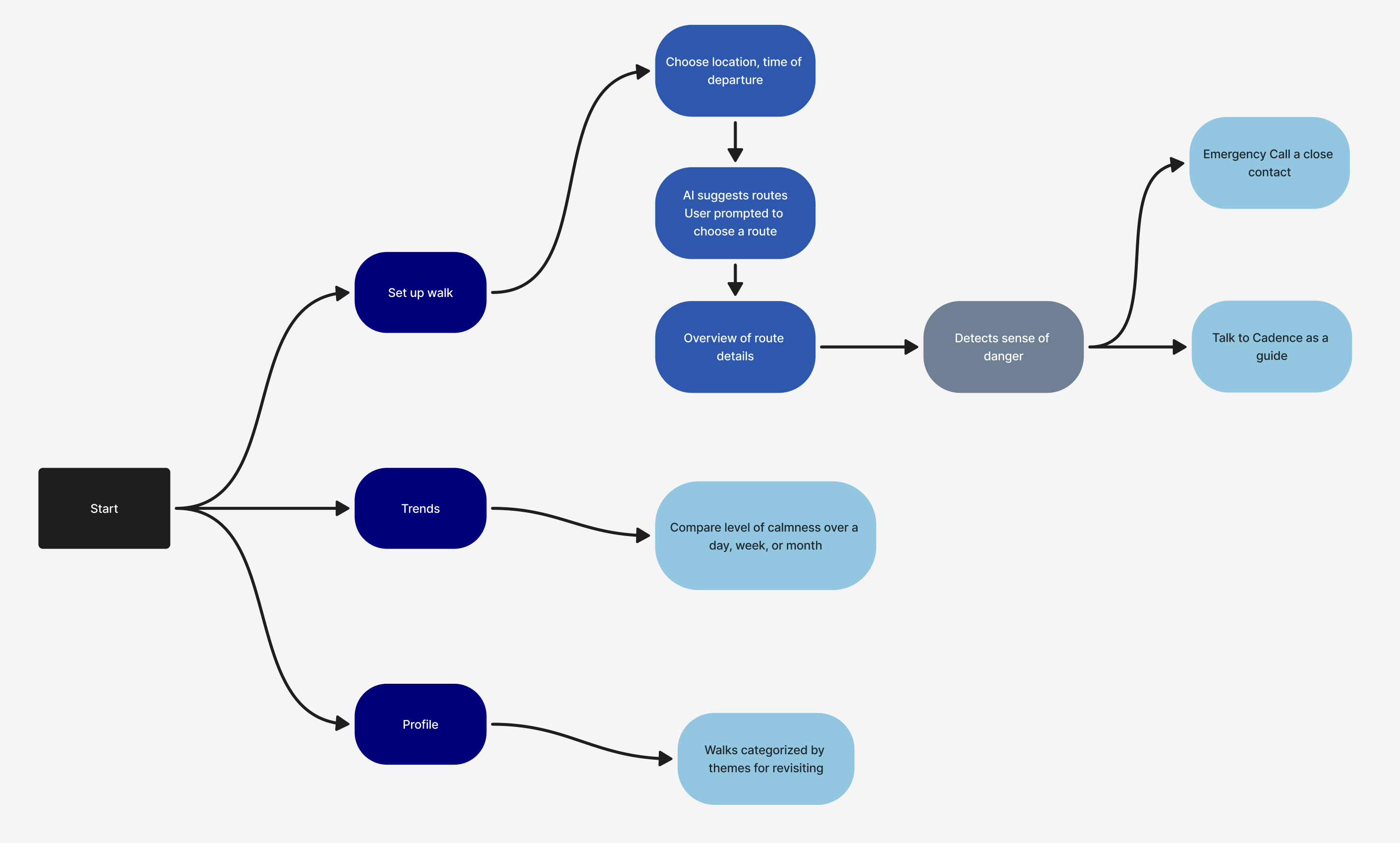
- Map recommends paths based on lighting, people present, and familiarity before the user sets off
-
Emotional Safety Tracking
- Tracks how safe the user feels through detecting eye movement, heart rate
- Compares emotional levels before and after their walk
- Builds a history of how safety feels on different routes
-
Companion Mode
- Plays ambient audio or triggers a fake phone call to create a feeling of company
- Cadence can talk to the user to either guide or calm them down if there is no one to immediately contact
Design process
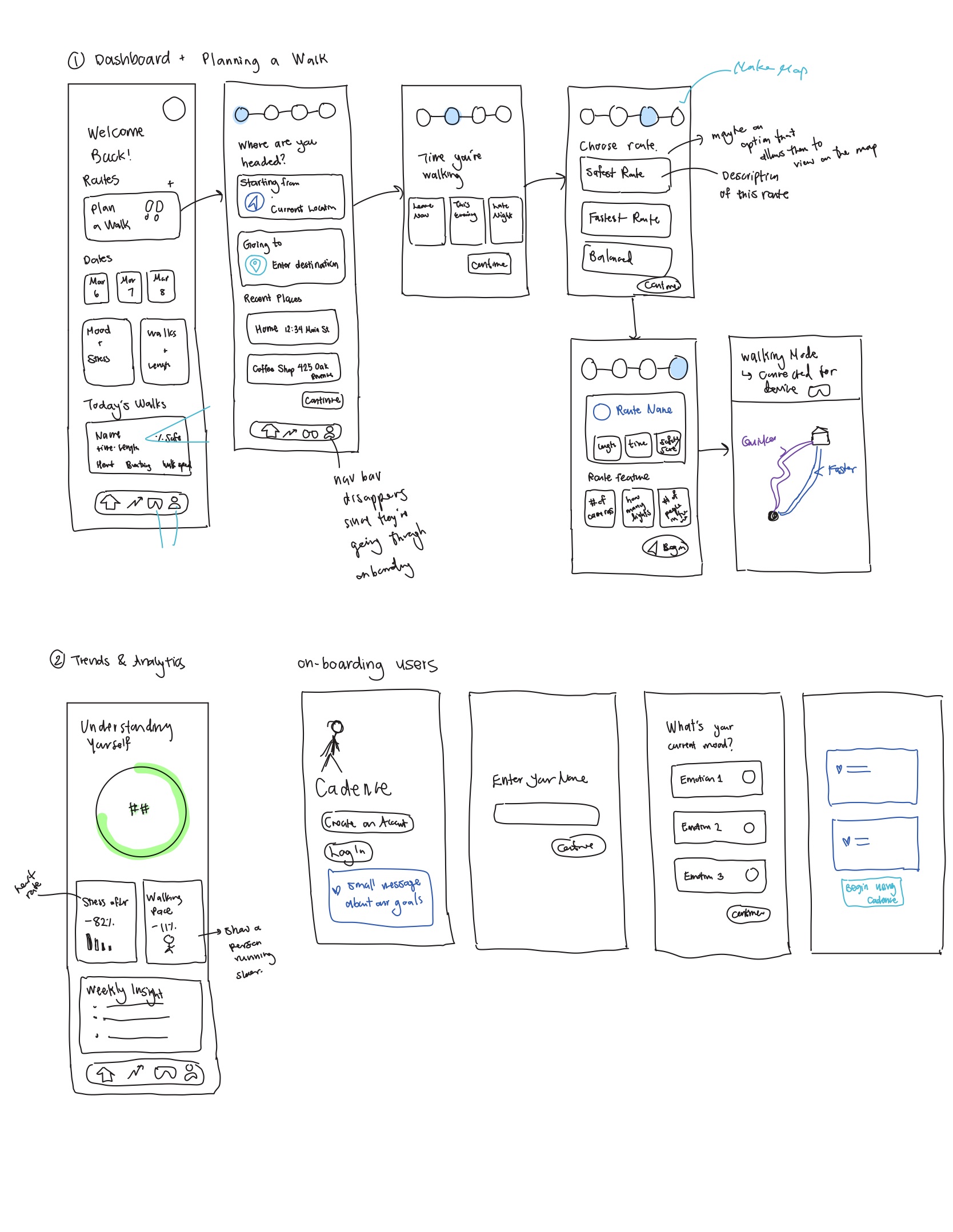
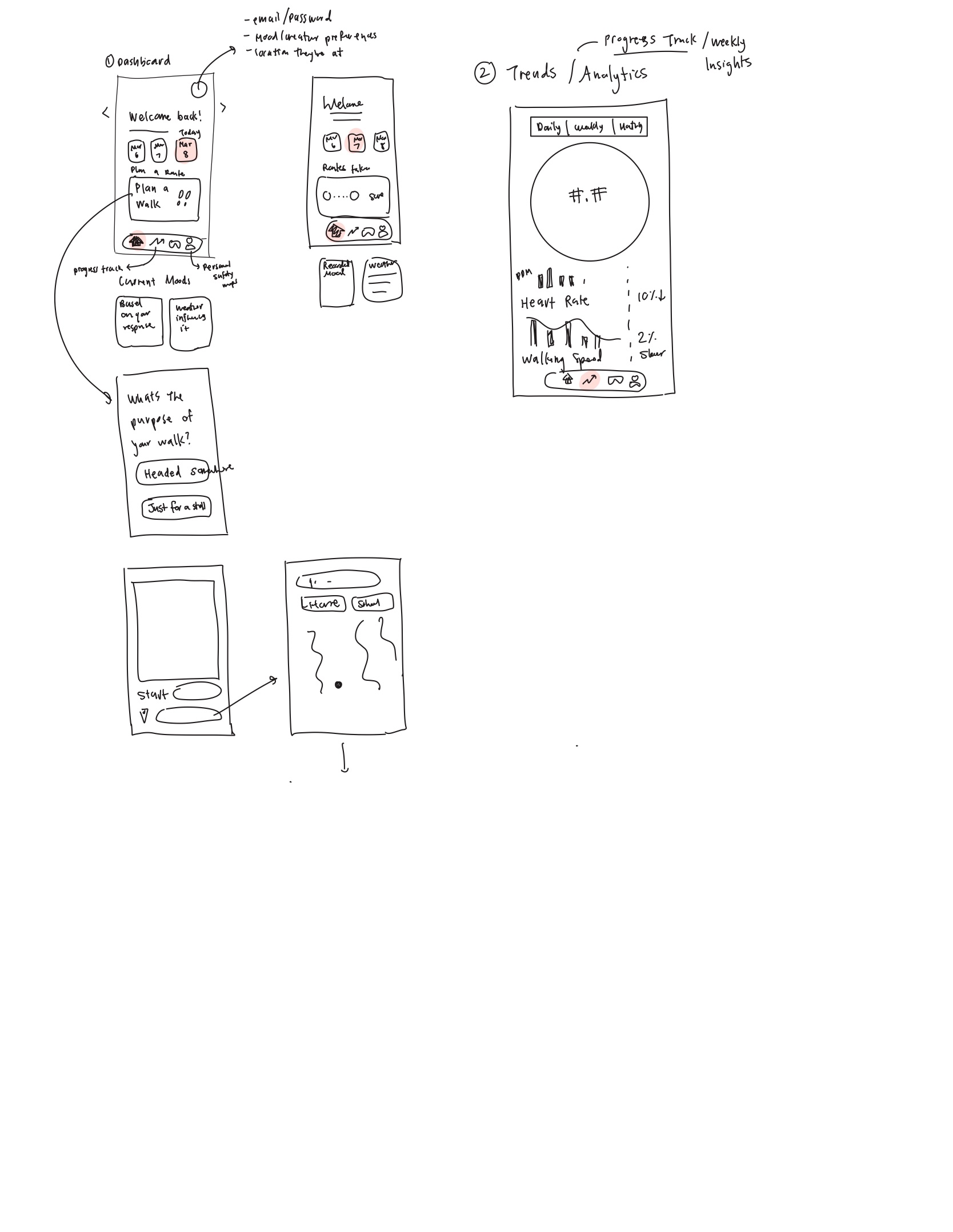
Sprint Iterating
Cadence focuses on making the user feel safe through suggesting safer routes and playing the role as a companion. AI is integrated to assess the situation and alleviate the sense of danger by directly interacting with the user in conversation.
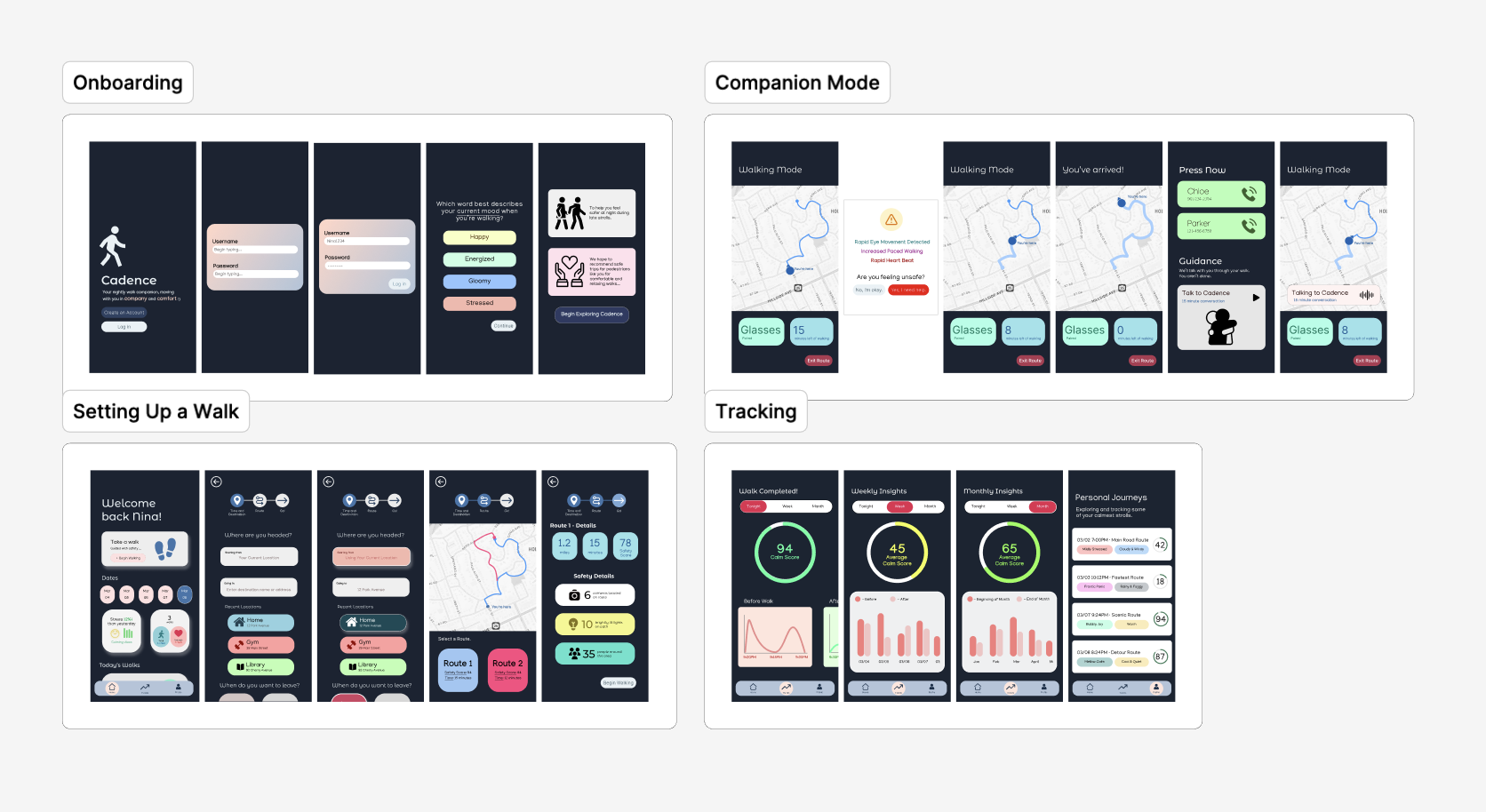
The Final Product
In the future
If I had more time...
- User Testing Confirm if design choices address user needs
- Building Bringing these ideas to life with code.
- Branding Distinguishing our product with a clear visual representation
Reflection
What I learned.
-
Collaboration under time pressure
Every decision was made after careful negotiation to adapt and accept changes to eventually align on a shared concept when ideating.
-
User Empathy
Understanding the user behaviors and needs as motivation for our design; allowing us to create intentional designs.
-
Rapid Prototyping
Recognizing that a plan is essential time optimization. Refining, building, and not forgetting the details that don’t get lost when iterating at a rapid pace.